Basketball Quarter Betting — How to Profit From Segment-Level Markets
 Available in US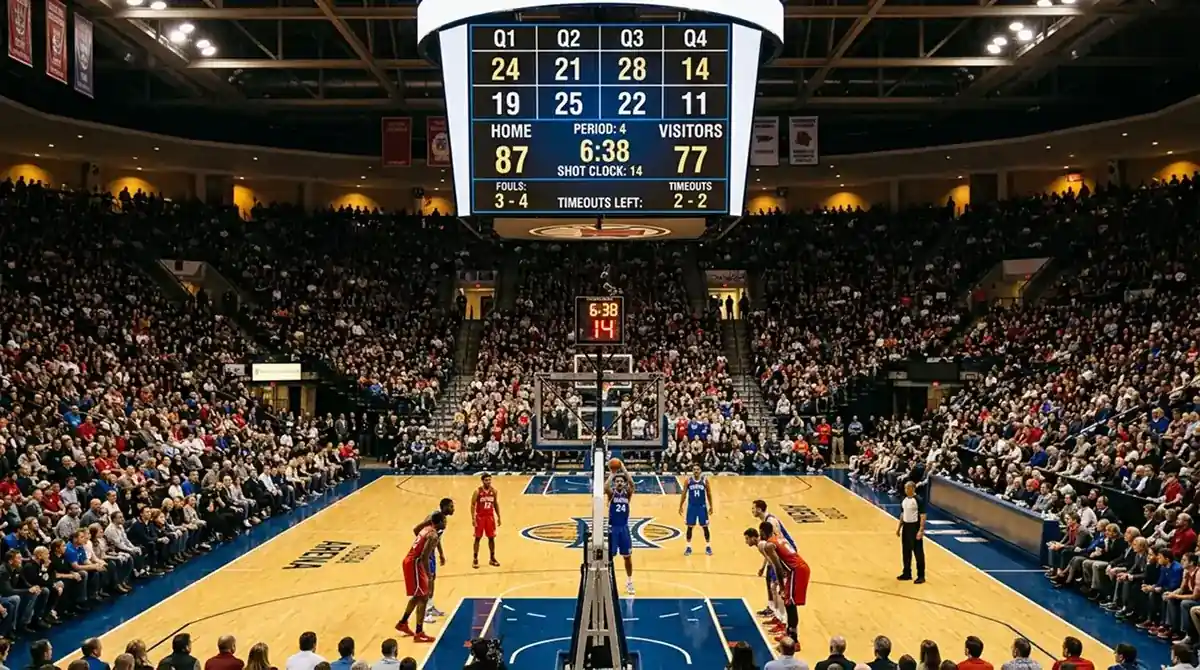
Most basketball bettors think in full-game terms. They analyse a matchup, pick a side or a total, and wait 48 minutes for the result. I did the same for years until I started breaking games down by quarter — and discovered that the patterns within a game are often more exploitable than the game-level outcome. Quarter and half markets exist in a quieter corner of the basketball betting menu, and that relative obscurity is where their value lives.
Live betting now generates 62.35% of all online sports betting revenue, growing at a compound annual rate of 13.62%. Quarter markets sit at the intersection of pre-game and live betting — they are short enough to feel tactical but structured enough to analyse systematically. This guide covers what UK sportsbooks offer, how pace and rotation data drive quarter outcomes, and where the genuine edges sit.
Quarter and Half Markets — What Is Available at UK Sportsbooks
The standard quarter betting menu at a major UKGC-licensed sportsbook includes: first quarter winner, first quarter spread, first quarter total, first half winner, first half spread, and first half total. Some operators extend this to every quarter (second, third, fourth), though coverage thins as you move deeper into the game because those later quarters are more commonly served by live betting markets instead.
First quarter markets attract the most liquidity and the tightest lines. That makes intuitive sense — by the time you reach the third quarter, enough game context has accumulated that live betting becomes the natural vehicle. But first quarter betting is effectively pre-game betting on a 12-minute window, and that compressed timeframe has statistical properties that differ significantly from the full-game market.
Half-time markets split the game into two 24-minute segments. First half totals and spreads are particularly interesting because they capture the period when both teams are playing their primary rotations at full intensity. Second half markets are available at some operators but typically only as live products after half-time, not as pre-game selections.
One important caveat: quarter market margins are wider than full-game margins. A full-game spread might carry a 4-5% overround; the equivalent first quarter spread often runs 6-8%. You are paying more per bet for the shorter time horizon, which means your analytical edge needs to be proportionally larger to overcome the margin. I factor this into my staking — quarter bets receive 0.5 to 1 unit rather than the 1-2 units I allocate to full-game positions.
Using Pace and Scoring Data to Bet Quarters
The first quarter of an NBA game is a statistical anomaly. Starters play the entire period. Coaching adjustments have not yet taken effect. Teams run their opening sets — often their best-rehearsed offensive actions — before the opponent forces them to adapt. The result is that first quarter scoring tends to be higher per minute than any other quarter, and the variance is lower because the lineups are predictable.
Pace is the dominant factor. A team’s pace — the number of possessions per 48 minutes — tells you how quickly the game will flow and, by extension, how many scoring opportunities each quarter will contain. When two high-pace teams meet, the first quarter total should skew above the league average. When two slow-pace teams play, the opposite applies. The sportsbook sets quarter totals partly on seasonal averages, which means matchup-specific pace differentials are not always fully reflected in the line.
I track first quarter scoring averages for and against for every NBA team, updated weekly. The data is freely available from NBA.com’s advanced stats section. What matters is not just how much a team scores in the first quarter, but how much they allow. A team that scores efficiently in the first quarter but also gives up easy baskets creates a high-total first quarter environment regardless of which side covers the spread. The over on the first quarter total has been my most consistent quarterly market over the past four seasons, largely because pace-driven totals are easier to project than quarter spreads.
The third quarter is statistically the most volatile. Half-time adjustments change defensive schemes, some coaches manage minutes differently coming out of the break, and the emotional tenor of the game shifts based on the first half’s outcome. I generally avoid third quarter pre-game markets for this reason — the variance is highest and the analytical edge is weakest. If I am betting the third quarter, it is live, after watching how the first half played out.
How Rotation Patterns Affect Quarter Outcomes
In-play betting on basketball captures roughly 70-75% of total handle globally, and a significant driver of that volume is the way NBA rotation patterns create predictable scoring environments within games. The first and third quarters typically feature starting lineups. The second and fourth quarters feature a mix of starters and bench players, with the specific rotation pattern varying by coach.
Understanding a coach’s rotation tendencies is critical for quarter betting. Some coaches stagger their stars — keeping one on the floor at all times — which stabilises scoring across quarters. Others play their starters together and their bench together, which creates stark scoring differentials between quarters. When a team with a deep bench faces a team with a thin bench, the second quarter — where bench depth is most exposed — becomes an exploitable window.
Foul trouble introduces variance into rotation planning. A starter picking up two early fouls will sit for the remainder of the first quarter and possibly the start of the second, which alters the scoring profile of both periods. This is more relevant for live quarter betting than pre-game, but it is worth monitoring when you have a first quarter position running — a key player sitting with fouls changes the dynamic for every quarter market.
Back-to-back scheduling affects quarter patterns too. Teams playing the second night of a back-to-back tend to start slower, with measurably lower first quarter scoring averages compared to rested games. The sportsbook adjusts the full-game total for fatigue, but the quarter-level adjustment is less precise. If a first quarter total looks roughly the same as the team’s rested average, check whether the squad is on a back-to-back — the market may not have discounted that fatigue at the quarter level. Read our detailed review of Basketball Spread Betting in the UK — How Variable-Payout Markets Work.
Quarter Betting as a Tactical Edge
Quarter markets reward a specific type of bettor: someone willing to dig into granular data that the game-level market already absorbs but the quarter-level market does not fully price. Pace splits, rotation maps, and first quarter scoring trends are all publicly available. The edge is not in having secret information — it is in applying publicly available information to a market segment where fewer bettors are doing the work. For how quarter markets function within live betting specifically, see my guide to live basketball betting in the UK. Find the best options for basketball betting guide.
Which quarter is most profitable to bet on in basketball?
The first quarter is the most analytically accessible because lineups are predictable (all starters), coaching adjustments have not yet taken effect, and pace-driven scoring patterns are at their most stable. First quarter totals have been my most consistent market. The third quarter is the most volatile due to half-time adjustments and rotation changes, making it better suited for live betting than pre-game positions.
Do UK sportsbooks offer quarter betting for EuroLeague?
Some major UK sportsbooks offer first quarter and first half markets for marquee EuroLeague fixtures, but coverage is less consistent than for NBA games. EuroLeague quarters are 10 minutes versus 12 in the NBA, which compresses the scoring range and increases variance within each period. Check availability on a game-by-game basis rather than assuming quarter markets will be present for every EuroLeague round.
Written by the editors at Basketball Betting Guide.