Basketball Betting Odds Comparison — How to Line Shop Across UK Sportsbooks
 Available in US
The bet that converted me into a line shopper was a Boston Celtics -4.5 spread in February 2022. One sportsbook had it at 1.91, another at 1.95, and a third at 1.87. I backed it at 1.95 without thinking twice. The Celtics won by exactly five points. All three bets would have landed regardless of where I placed them — but that 0.04 difference in decimal odds on a regular-stakes bet was free money sitting on the table. Over the course of a season, those fractions compound into a material difference in your bottom line. I tracked it for a full year after that: systematic line shopping added roughly 2.5% to my return on investment compared to using a single sportsbook. In a market where long-term profitable bettors operate on margins of 2-5%, that is the difference between breaking even and making money.
Why Comparing Basketball Odds Matters More Than You Think
Every sportsbook sets its own lines based on its own models, its own exposure, and its own customer base. The idea that all books offer the same price is a myth that costs recreational bettors thousands of pounds over a betting lifetime. Two UK-licensed sportsbooks pricing the same NBA game can differ by a full point on the spread or 0.08-0.12 on the decimal odds for a moneyline bet. Those differences arise because each sportsbook manages risk independently, weights sharp action differently, and adjusts for the composition of its own customer pool.
The US national hold rate — the percentage of total wagers retained by sportsbooks — climbed to approximately 10.2% in 2025. That figure includes all bet types, and same-game parlays drag it upward significantly, but even on straight spreads and totals, the house edge is real. Line shopping does not eliminate the house edge. What it does is ensure you are always taking the best available number, which reduces the effective margin you are paying on every bet. Over hundreds of bets, paying 1.93 instead of 1.87 on identical selections turns a losing year into a break-even one, or a break-even year into a modestly profitable one.
Basketball is particularly well-suited to line shopping for two reasons. First, NBA games attract sharp action that moves lines at different speeds across different books. A line that moves from -5 to -5.5 at one sportsbook might still be sitting at -5 at another for minutes or even hours, depending on how aggressively that book responds to sharp money. Second, the sheer volume of NBA games — up to 15 per night during peak schedule — means sportsbooks cannot dedicate the same level of individual attention to every line that they give to a Premier League Saturday fixture. Inefficiencies persist longer in basketball than in football.
Margin Differences Between UK Sportsbooks on Basketball
I ran a three-week tracking exercise last season, recording the best and worst available odds for 150 NBA spread bets across six UK-licensed sportsbooks. The results were not surprising to anyone who does this regularly, but they might shock a bettor who has never compared.
The average overround — the bookmaker’s built-in margin across both sides of a spread market — ranged from 4.2% at the tightest sportsbook to 6.8% at the widest. That 2.6 percentage-point gap is enormous. On a spread bet priced at 1.91/1.91 (the standard for a low-margin book), the implied probability adds up to 104.7%. The same bet at 1.85/1.85 implies 108.1%. If you are consistently taking 1.85 instead of 1.91, you are paying 3.4% more in margin per bet. Over 500 bets in a season, that is the equivalent of giving away 17 full stakes.
Moneyline markets showed even wider variation. On heavy favourites (teams priced below 1.30), the spread between the best and worst available odds regularly exceeded 0.05 in decimal terms. On underdogs priced above 3.50, the variation widened to 0.15-0.25. This makes intuitive sense — sportsbooks are less precise in pricing low-probability outcomes because the volume is lower and the model uncertainty is higher.
Totals markets (over/under) fell somewhere in between. The spread on the line itself (whether the total was set at 220.5 or 221.5) mattered more than the odds variation, because a half-point difference in the total changes the bet entirely. When the total was identical across books, odds variation was typically 0.03-0.06 in decimal terms.
Tools and Methods for Effective Line Shopping
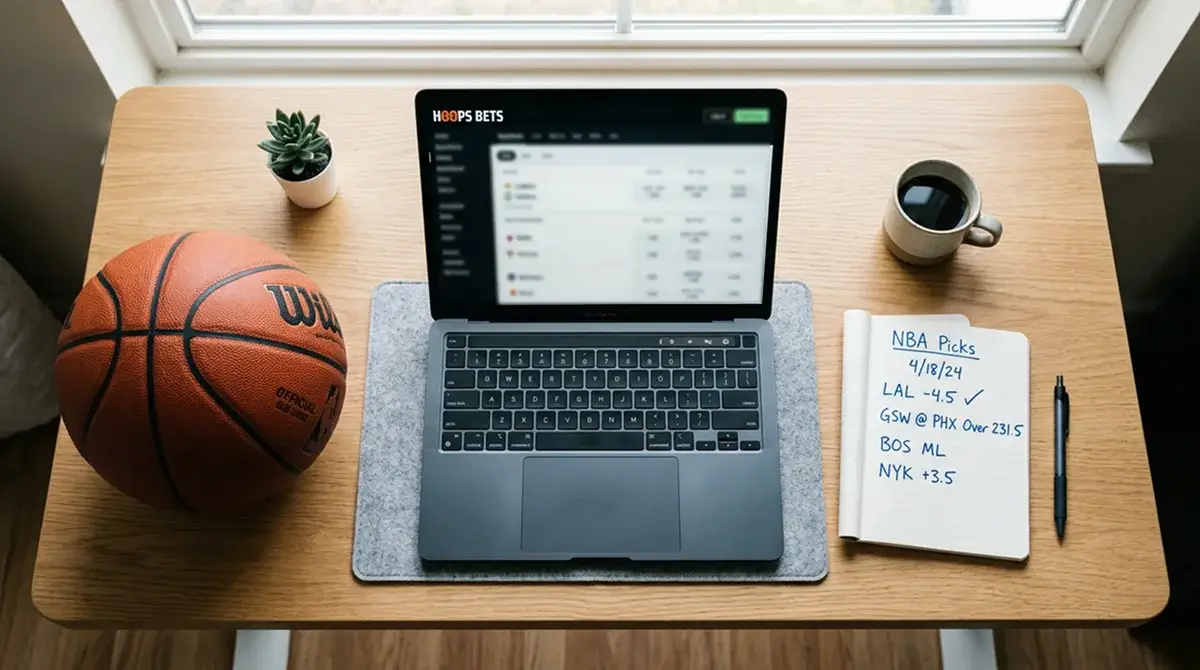
The simplest method is manual comparison. Open two or three sportsbook apps on your phone, navigate to the same game, and compare the numbers. This takes thirty seconds per bet and is all most recreational bettors need. If you are placing three to five bets per week, manual comparison is efficient enough.
For higher-volume bettors, odds comparison websites aggregate prices from multiple UK-licensed sportsbooks in real time. These tools display the best available odds for each market alongside the sportsbook offering them, making it possible to identify the optimal bet in seconds rather than flipping between apps. The better comparison sites also track line movement history, which helps identify when a line at a particular book is stale — sitting at a number that other books have already moved past.
I maintain accounts at five UK-licensed sportsbooks specifically for basketball betting. The marginal effort of maintaining multiple accounts is trivial compared to the cumulative edge from always taking the best number. Each account is funded with a working bankroll allocation, and I move my action to whichever book offers the best line on each individual bet. This approach requires a slightly larger total bankroll than using a single sportsbook, but the return on that capital is meaningfully higher.
One practical consideration for UK bettors: not all sportsbooks offer the same depth of basketball markets. Some books price NBA spreads and totals but do not offer player props or quarter markets. Others have extensive prop coverage but wider margins on the core markets. The sportsbook with the best spread odds might not be the best choice for a same-game parlay. Effective line shopping means matching the right book to the right bet type, not just chasing the best number on a single market. Check out our guide on Basketball Betting Odds — How to Read, Convert, and Find Value in UK Markets as well.
Building Line Shopping Into Your Betting Routine
The bettors who benefit most from line shopping are the ones who make it automatic rather than optional. I treat it like checking the weather before leaving the house — it takes a moment, costs nothing, and occasionally prevents a disaster. Before every bet, I check at least three books. If the variation is less than 0.02 in decimal odds, I place the bet at my primary sportsbook for convenience. If the variation exceeds 0.02, I go with the best number regardless of which account holds it.
The discipline required is minimal. The returns are not. Over a lifetime of basketball betting, systematic line shopping is the single easiest way to improve your results without changing anything about your selection process. You do not need a better model, sharper analysis, or inside information. You just need to check one more app before pressing “place bet.” Discover everything about basketball betting guide here.
How much difference do odds make between UK basketball sportsbooks?
On NBA spread markets, the difference between the best and worst available odds at UK-licensed sportsbooks typically ranges from 0.04 to 0.08 in decimal terms. On moneylines, especially for heavy underdogs, the variation can exceed 0.15-0.25. Over a full season of betting, these differences compound to a meaningful impact on overall profitability.
Are there free tools for comparing basketball betting odds in the UK?
Yes. Several odds comparison websites aggregate basketball odds from multiple UK-licensed sportsbooks in real time at no cost. These tools display the best available price for each market and track line movement history. For most bettors, combining a free comparison site with manual checks across two or three sportsbook apps is sufficient.
Written by the editors at Basketball Betting Guide.