Basketball Betting Cash Out — When to Take Early Profit and When to Hold
 Available in US
I once had a four-leg NBA accumulator sitting at three legs green with the final game midway through the third quarter. My cash-out offer was 78% of the full potential payout. The fourth team was up by six but had just lost their starting point guard to a turned ankle. I cashed out. They won by twelve. I left money on the table and I would make the same decision again tomorrow. That situation captures everything about cash out in basketball betting — it is not about maximising every individual bet. It is about managing uncertainty in real time, and knowing when the guaranteed return outweighs the expected value of letting the bet ride.
How Cash Out Is Calculated — The Maths Behind the Offer
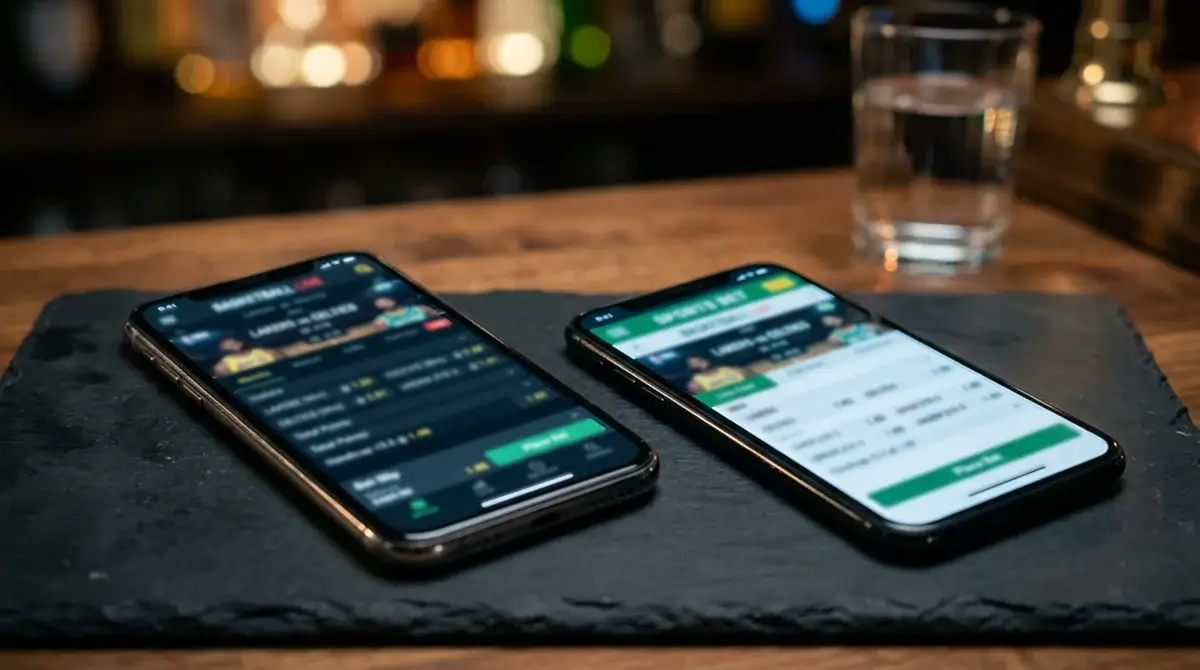
Cash out is not a gift from the sportsbook. It is a second bet, priced in the sportsbook’s favour. When a bookmaker offers you a cash-out figure, they are essentially buying your bet back at a price that includes their margin — the same margin they build into every line they set. Mobile apps now handle roughly 78% of online bets globally, and the cash-out feature is one of the primary reasons bettors choose mobile over desktop. It is fast, accessible, and psychologically compelling. But speed and convenience do not change the underlying maths.
The calculation works like this. The sportsbook takes the current in-play odds for the remaining legs of your bet (or the remaining outcome, for single bets), calculates the expected value at those odds, and then applies its margin. The cash-out offer is always less than the mathematically fair value of the bet at that moment. On a typical NBA spread bet where you are in a winning position, the cash-out offer might be 3-8% below the theoretical fair value depending on the sportsbook, the market, and the time remaining in the game.
That margin is the cost of certainty. You are paying the sportsbook to remove the remaining risk from your position. Whether that cost is worth paying depends entirely on the specific situation — the remaining variance, the size of the potential payout relative to your bankroll, and your personal tolerance for letting profitable positions run. Check out our guide on Basketball Betting Data Sources — Where to Find the Numbers That Matter as well.
Partial Cash Out and Auto Cash Out — Features Worth Understanding
Partial cash out is the feature I use most frequently and the one I think most bettors underuse. Instead of cashing out your entire bet, you can lock in a portion of the profit while leaving the rest of the bet live. A typical scenario: you have a pre-match NBA bet at 2.50 odds that is now sitting at a 60% implied probability. Full cash out might offer you 1.4x your stake. Partial cash out lets you take, say, 0.7x and leave half the bet running. If the remaining outcome goes your way, you collect the residual. If it does not, you have already secured a profit.
The strategic value of partial cash out is that it lets you reduce variance without completely sacrificing upside. For accumulator bets — where the remaining legs carry substantial uncertainty — partial cash out is often the better play than an all-or-nothing decision. I think of it as position sizing for live bets: you are adjusting your exposure based on new information.
Auto cash out lets you set a target threshold, and the sportsbook will automatically cash out your bet if the offer reaches that level. This is useful for UK bettors following NBA games that tip off after midnight. I have set auto cash-out thresholds before going to bed, knowing that if the game swings my way during the third quarter, the bet will be closed at a level I am comfortable with. The alternative — waking up to find I missed a cash-out window because I fell asleep during the fourth quarter — is a frustration I would rather avoid.
Not all sportsbooks offer partial or auto cash out on basketball markets. The feature set varies by operator and by market type. Pre-match single bets almost always have cash-out availability. In-play singles usually do as well, though the offer refreshes frequently and can be temporarily unavailable during fast-moving sequences. Accumulators typically support cash out but may restrict it if one of the legs is in a live game where the sportsbook’s in-play model is updating. Discover everything about basketball betting guide here.
When Cash Out Makes Sense — and When It Does Not
The decision framework I use is simple but takes discipline to follow. Cash out makes sense when the current offer represents a favourable trade relative to the remaining risk. It does not make sense when the remaining risk is small and the potential upside is large.
Specifically, I consider cashing out in three situations. First, when new information has shifted the probability meaningfully against my bet — an injury, an ejection, a tactical change — and the cash-out offer has not yet fully adjusted to reflect that shift. In those moments, the sportsbook’s in-play model is updating but may lag behind my assessment. Second, when the cash-out amount is large enough relative to my bankroll that the guaranteed return matters more than the marginal expected value of holding. A life-changing accumulator payout with one leg remaining is a different risk calculation than a routine single bet in the third quarter. Third, when I am tired, distracted, or emotionally compromised — any state where my judgment about the remaining outcome is likely to be worse than the sportsbook’s pricing.
I avoid cashing out in two situations. When the remaining probability is heavily in my favour — a team up by 15 points with four minutes left, for example — the cash-out offer will be close to the full payout anyway, and the margin the sportsbook extracts is not worth paying. And when the decision to cash out is driven by anxiety rather than analysis. The urge to secure profit is one of the strongest behavioural biases in betting, and sportsbooks design the cash-out button to exploit exactly that impulse. The pulsing green button, the countdown timer, the sense that the offer might disappear — all of it is engineered to make you act emotionally. Recognising that design for what it is makes it easier to resist when the maths says to hold.
Over the long term, a bettor who cashes out every time they are ahead will underperform a bettor with identical selections who never cashes out. This is because the cash-out margin compounds over time. The value of cash out lies in selective, strategic use — not as a default action but as a tool for specific situations where the trade-off between certainty and expected value favours certainty.
Do all UK sportsbooks offer cash out on basketball bets?
Most major UKGC-licensed sportsbooks offer cash out on basketball markets, but the feature set varies. Pre-match single bets and accumulators almost always support cash out. In-play cash out is available at most operators but may be temporarily unavailable during fast-moving game sequences. Partial cash out and auto cash out are offered by some but not all operators.
Is cashing out mathematically worse than letting a bet run?
Yes, in expected value terms. The cash-out offer always includes the sportsbook’s margin, meaning you receive less than the fair value of your bet. Over hundreds of decisions, a bettor who cashes out every time they are ahead will underperform one who never does. The value of cash out lies in selective use for specific situations — managing large potential losses, acting on new information, or securing meaningful profits relative to your bankroll.
Prepared by the Basketball Betting Guide editorial staff.